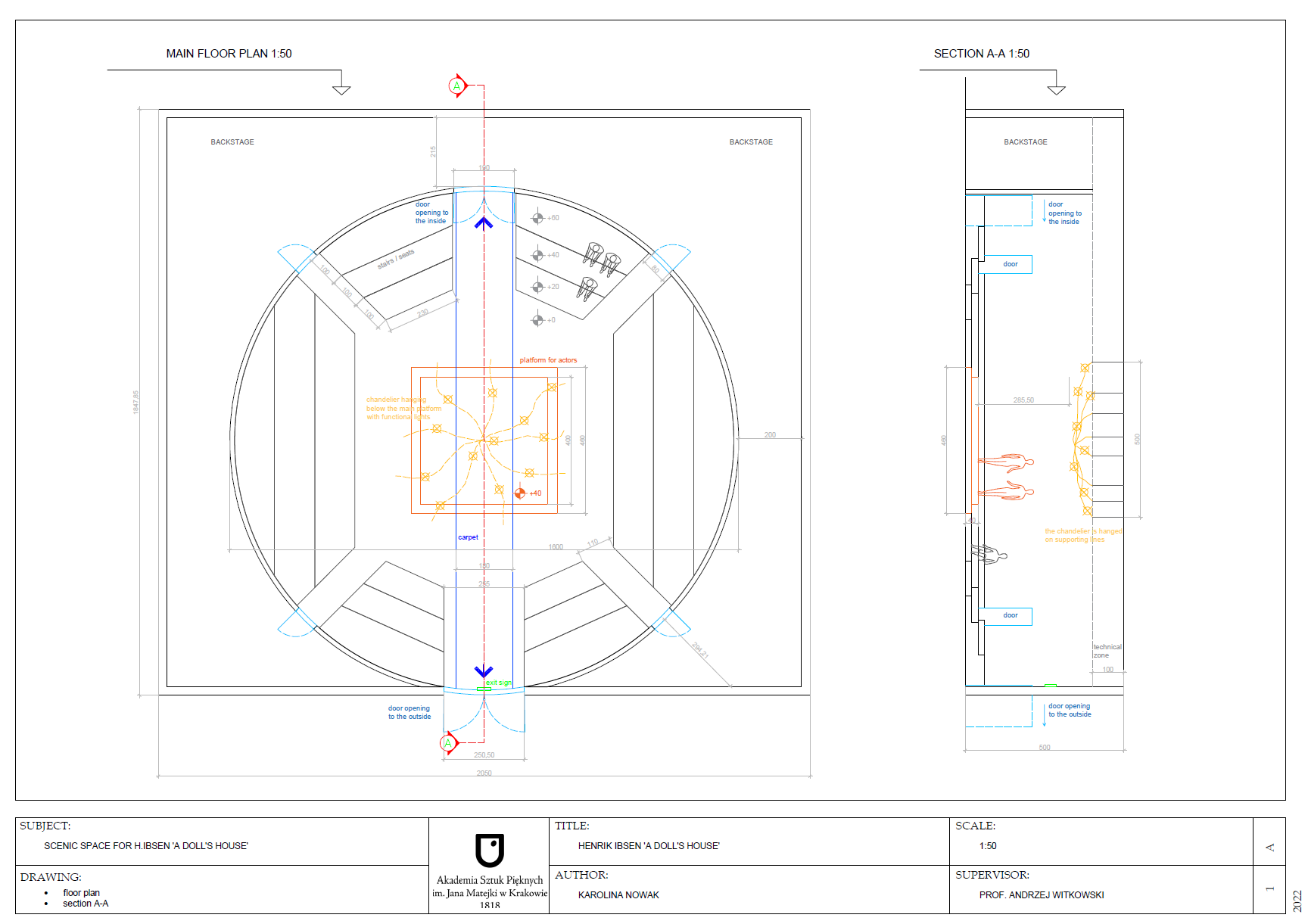
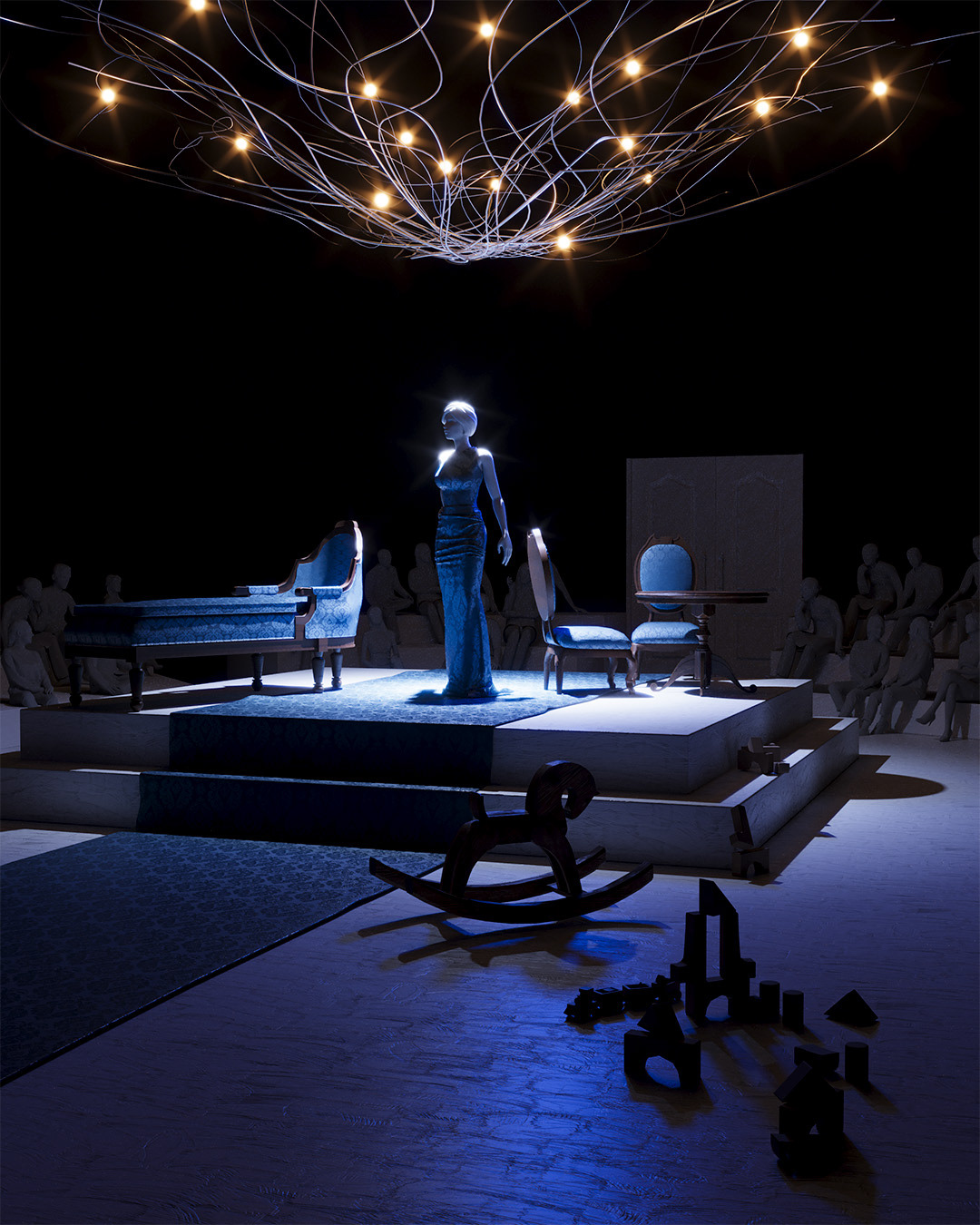
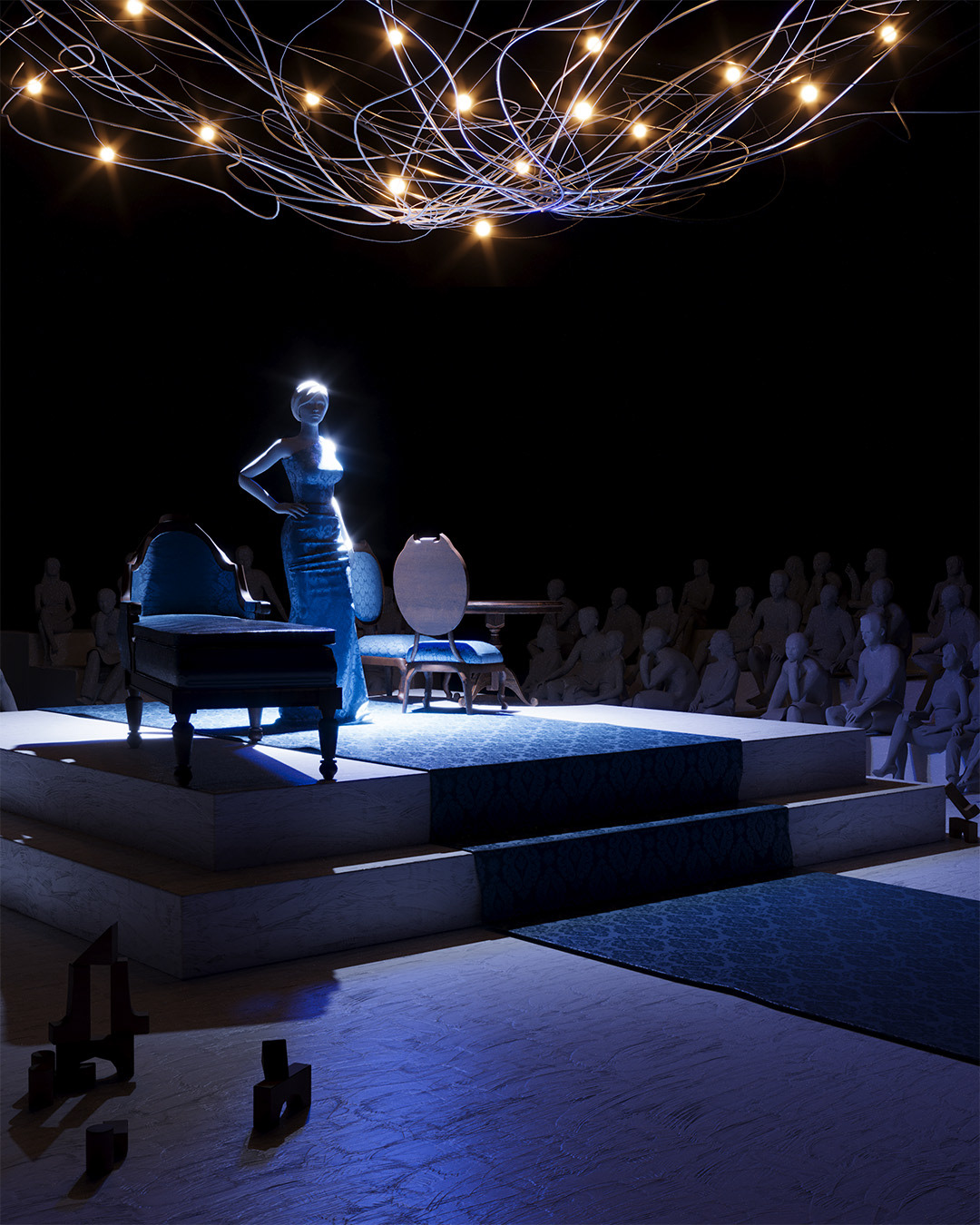
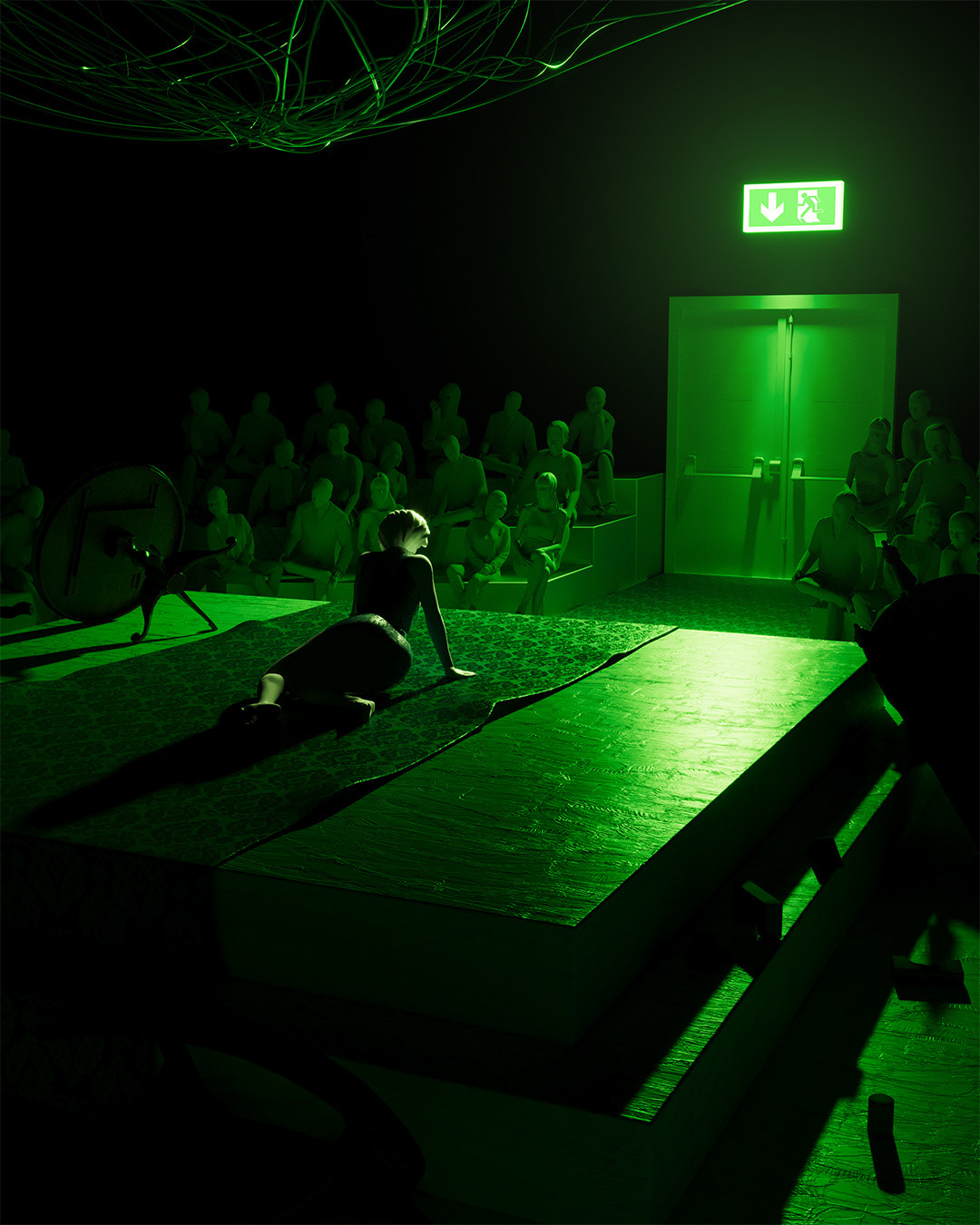
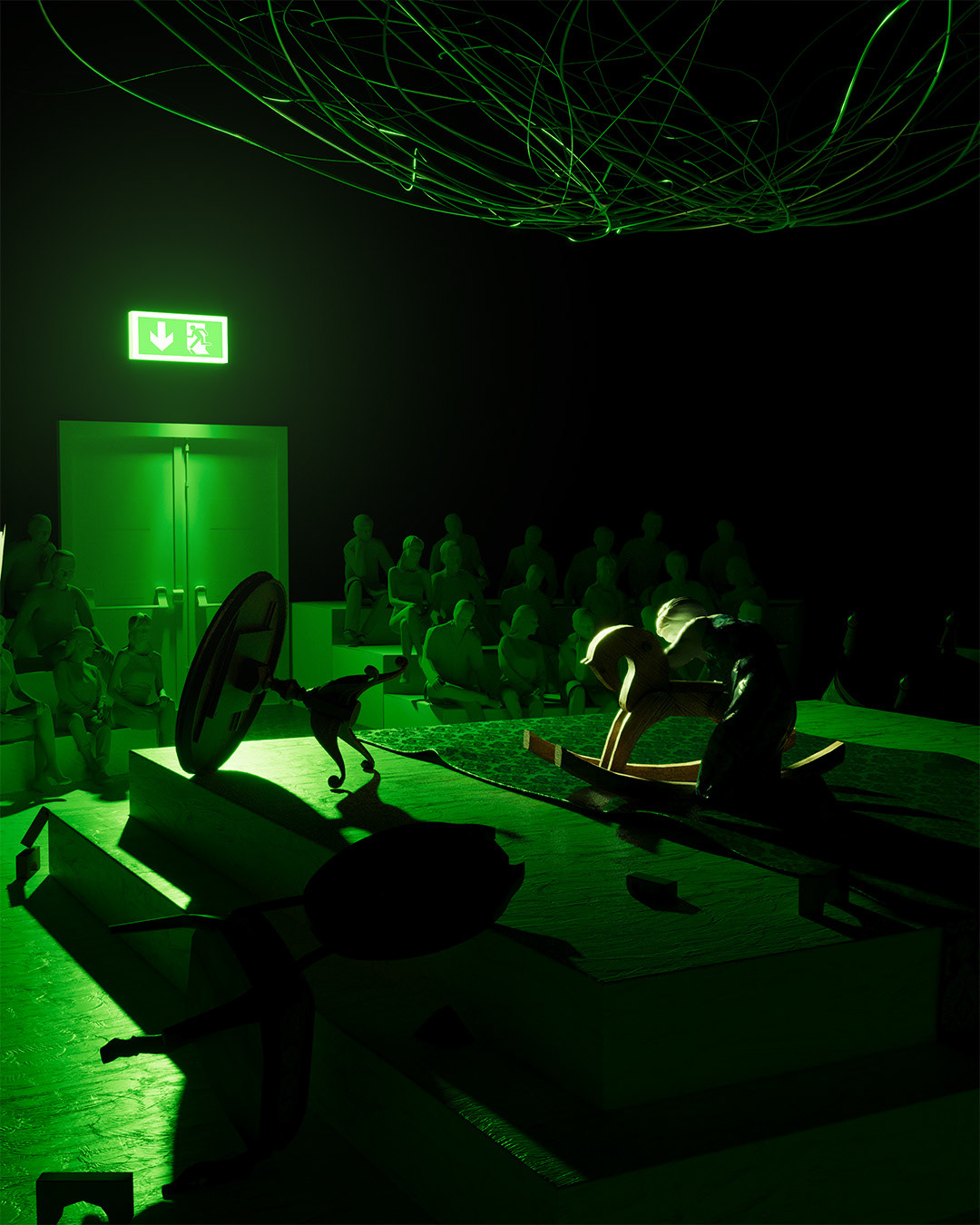
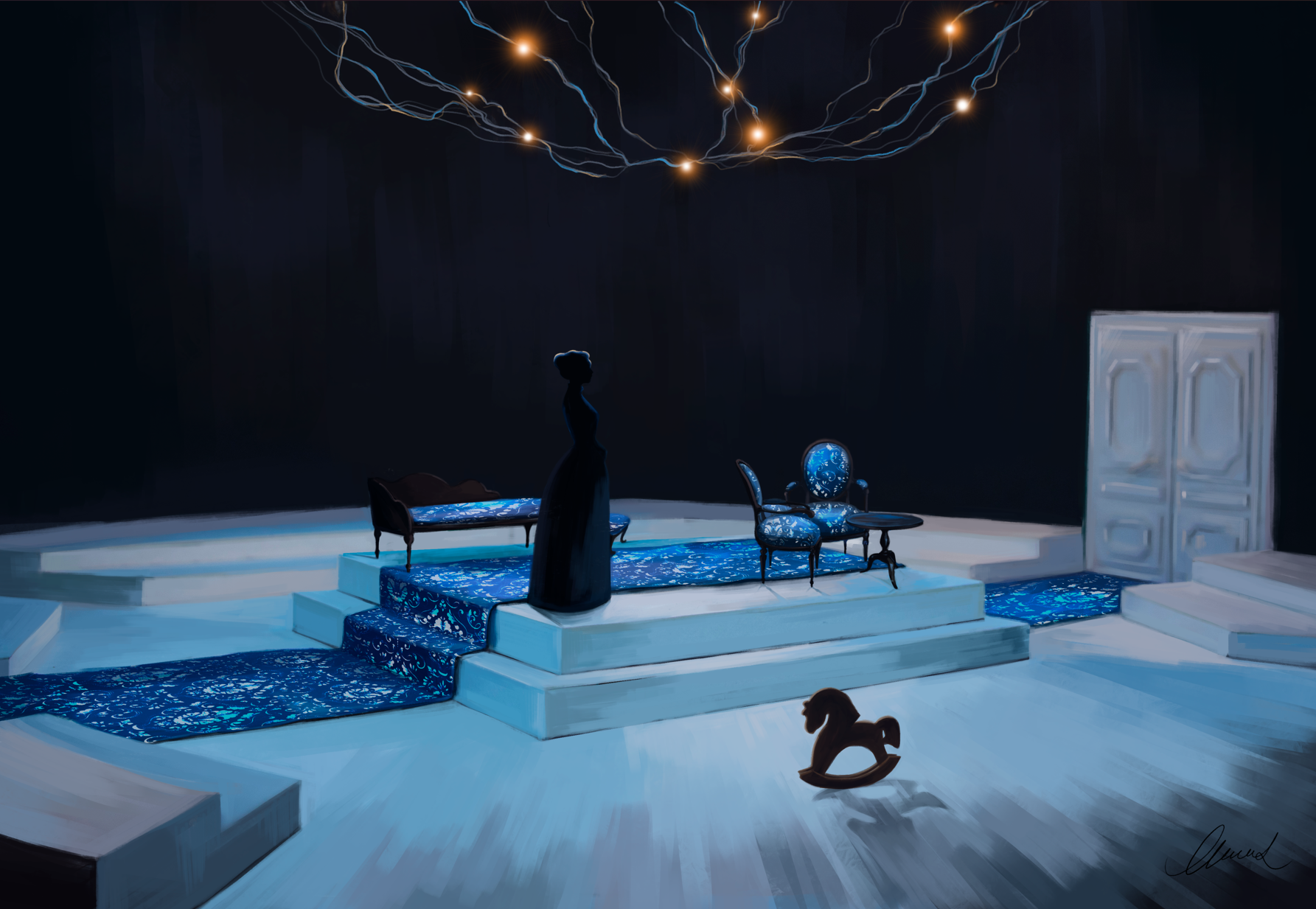
The set for A Doll’s House unfolds as a circular space, enclosing the action like a ritual chamber. The audience surrounds a central platform, drawn into the heart of the drama, not merely as spectators, but as silent witnesses within an intimate, almost claustrophobic arena. At the centre of it all is Nora, the protagonist, caught in the delicate tension between performance and reality.
This symbolic architecture reflects the confines of her existence: curated, controlled, and sealed within a carefully constructed façade. She moves through it like a figure in a music box - elegant, precise, and contained. But as her inner world fractures, the structure around her begins to feel less like a home and more like a stage built to contain her.
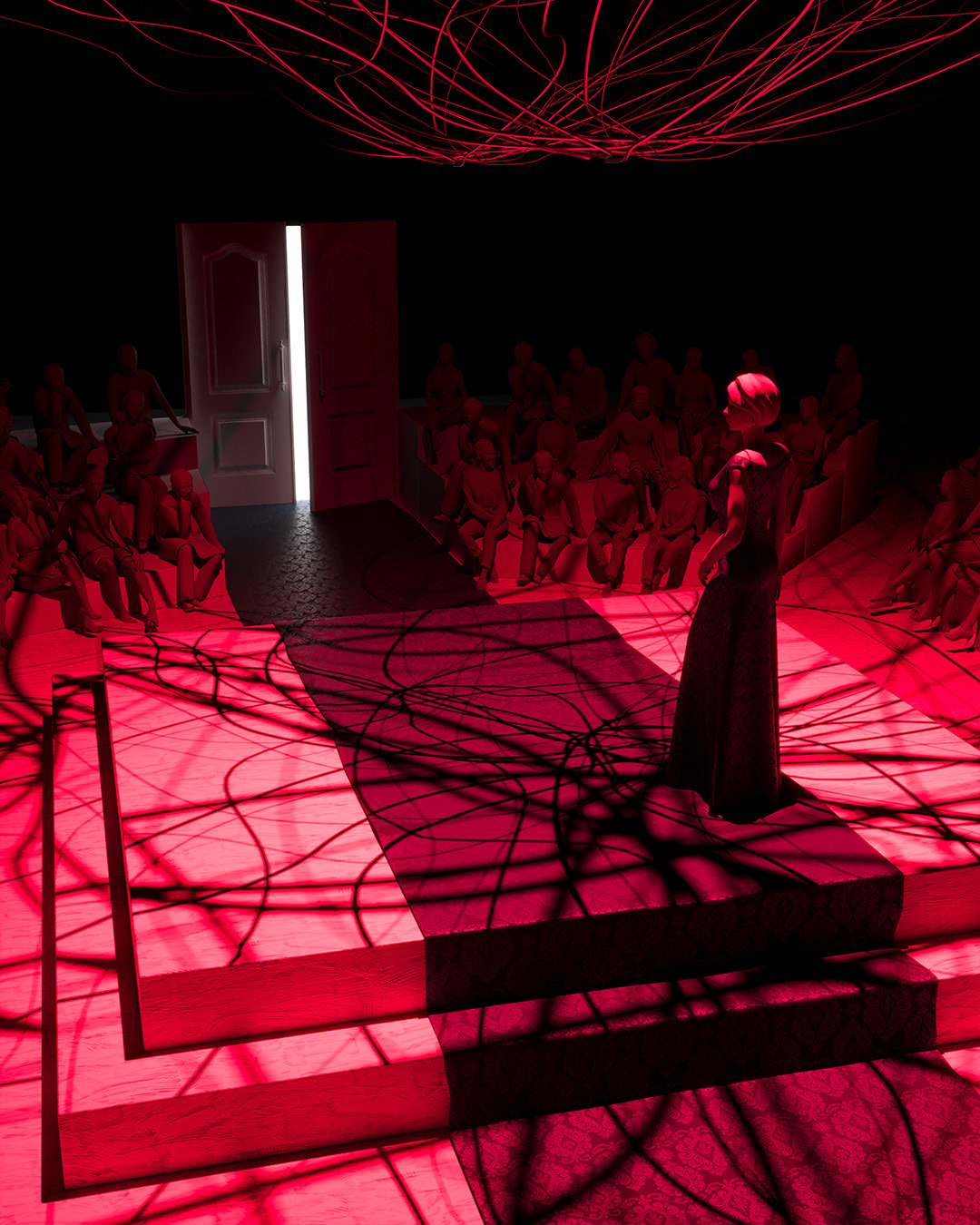
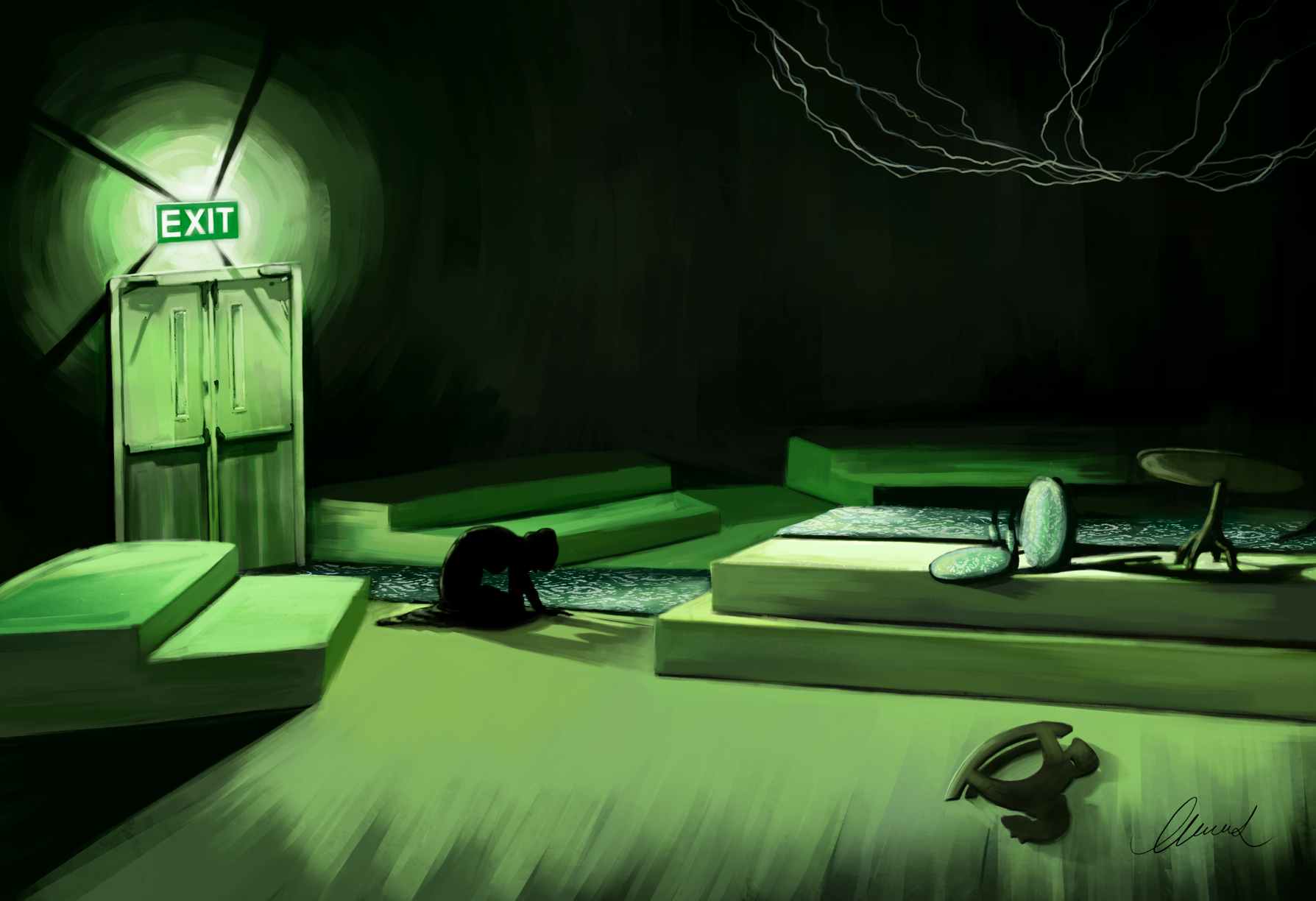
Her final act, stepping beyond the circle, is more than an exit: it is a rupture. A shedding of roles, a crossing into something uncharted. In leaving, she doesn’t just abandon a home, she breaks the illusion entirely.
VISUALISATIONs
“I believe that I am first and foremost a human being, like you.”
- Nora, Act III
Act II
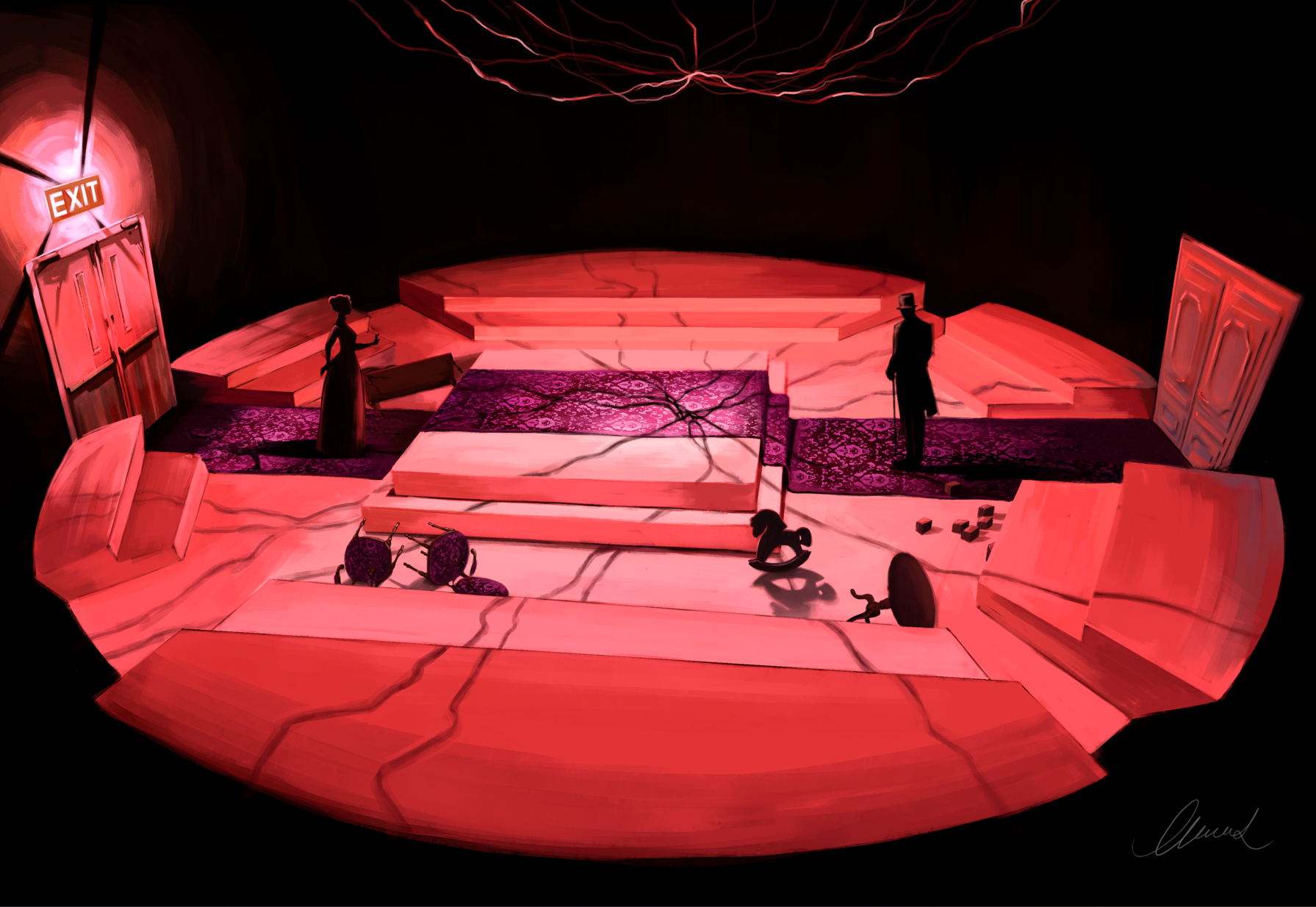
Act III
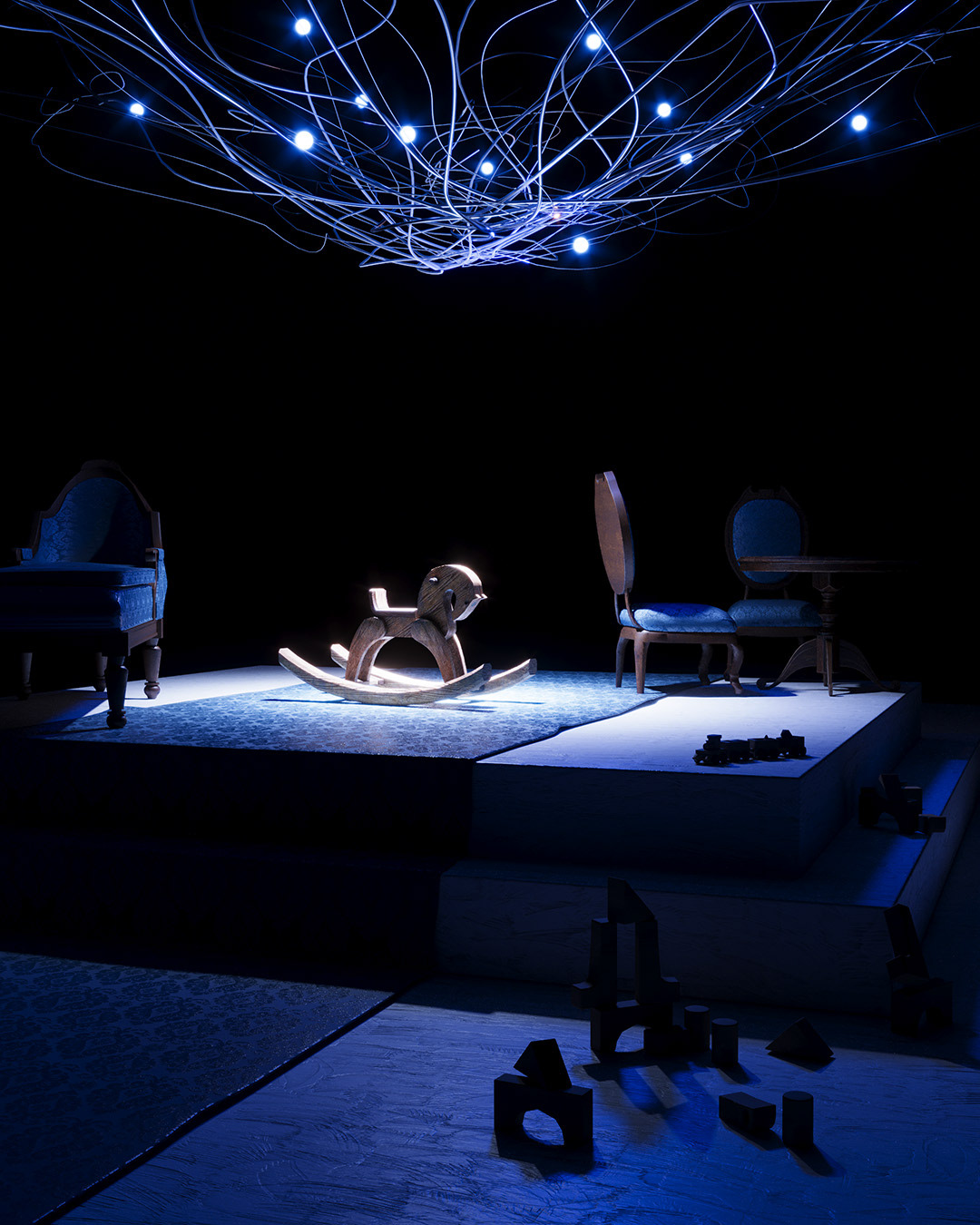
At the heart of the stage design is a custom-built chandelier that serves as both a decorative element and a psychological barometer. Inspired by festive Christmas lights, it begins Act One radiating soft, golden warmth, an illusion of comfort and joy that hovers over a frozen, wintry night.
As the narrative deepens, the chandelier subtly transforms. Its limbs grow denser and more erratic, taking on the shape of a delicate yet menacing web suspended above the characters, an alien presence echoing the mounting tension and emotional entrapment.
By the final act, it no longer offers warmth. It casts fractured, sharp shadows across the set, like cracks running through the walls of the domestic space, mirroring the disintegration of appearances and the rupture of Nora’s world.
the CONCEPT
TECHNICAL DRAWINGs